Erasure Poetry and Pluto: A Practice for Transformation, Grief, and Buried Treasure
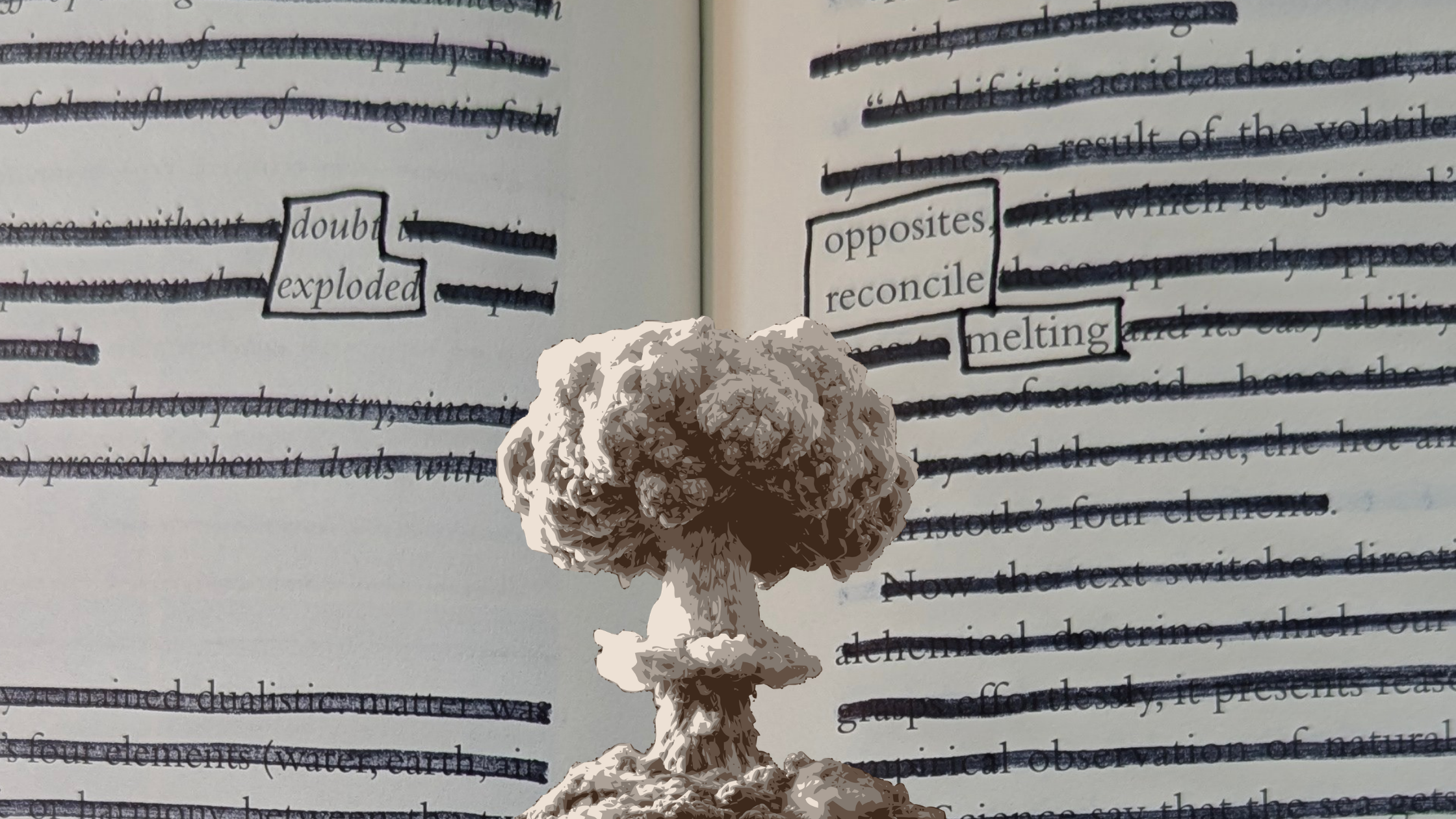
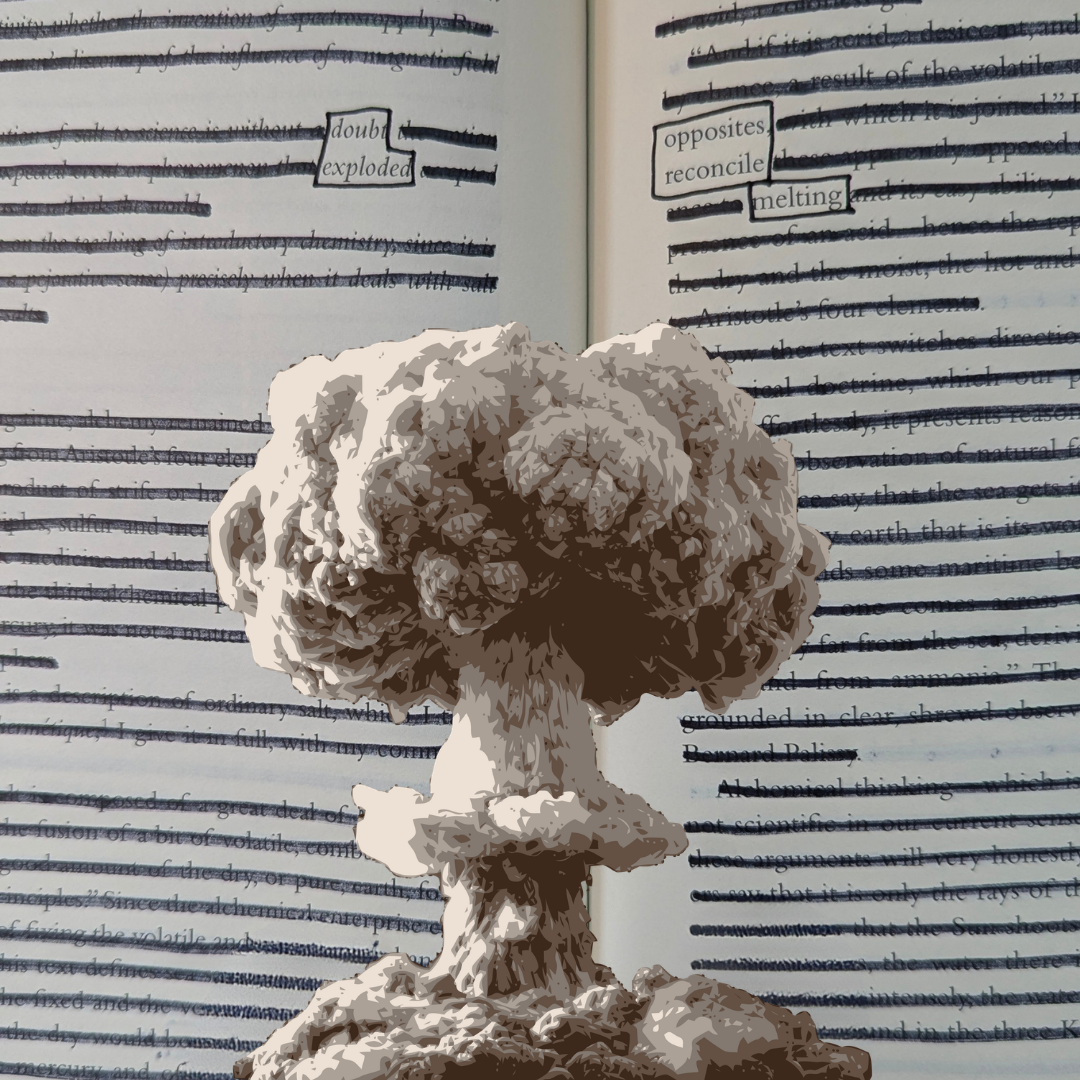
Erasure poem by Ada Pembroke (Source text: Salt by Pierre Laszlo)
In astrology, Pluto rules buried treasure — the hidden gems waiting beneath the surface of destruction and loss. As a Pluto practice, erasure poetry works the same way: you take an existing text, strip away everything that isn't yours, and find the hidden story that was always there.
In the astrology community in recent years, it has become popular to downplay the association between Pluto and transformation. Pluto is the Lord of the Underworld, people say. Pluto is Death. Death is the end. They point out that, when the dead go to Hades, they don’t come back, so the transformation of the death-rebirth cycle shouldn’t be part of the Pluto conversation. Any talk of transformation in the context of Pluto, they say, is just spiritual bypassing.
The astrologers who make this argument have a good point. Many of the astrologers who make this argument are members of the Pluto in Scorpio generation, so these symbols are near to their hearts. Hades was the end of the line in the ancient world (unless you were Orpheus or Dionysus or Persephone or Hermes or…), and avoiding spiritual bypassing is, of course, important.
But Pluto as Lord of Death isn’t the whole picture.
In ancient Greece, Pluto was known by two different names. There was Hades, Lord of the Underworld. And there was Plouton, Lord of Buried Treasure. In astrology, the planet Pluto points to both of these faces of Hades. These different names for Hades are significant. They aren’t just nicknames. In Greece, when a deity had different names, each name was almost an entirely separate entity. Hades and Plouton had separate temples, separate rites, separate priesthoods, and separate relationships with the communities that venerated them.
As Lord of Buried Treasure, Pluto rules everything that happens with rocks and minerals. He rules mining and the dig for treasure. He rules the purification metals and transformation of metals into alloys. And he rules the arts that turn rocks and minerals into jewelry and crowns.
At the level of the soul, when we talk about Pluto as Lord of the Underworld, we are talking about death, but when we talk about Pluto as Lord of Buried Treasure, we are talking about the transformation of alchemy.
Alchemy and the Healing Intelligence of Nature
The goal of alchemy is the transformation of “baser metals” into gold.
Modern people tend to see alchemy as a fool’s errand. Gold is an element. Lead is an element. Elements are, to put it mildly, reluctant to transform into other elements.
What most fail to understand is that the project of alchemy is not really about literal, scientific work, even if alchemists did lay the groundwork for chemistry. Alchemy is about something much deeper. It's a myth about the healing intelligence of nature.
In The Forge and the Crucible, Mircea Eliade says that in traditional cultures around the world, minerals and gems are understood as the earth mother's children, ripening underground, moving slowly toward gold. Alchemy has its roots in this worldview. It operates under the assumption that everything buried underground in Pluto’s realm is engaged in this perfecting process.
Alchemy is human cleverness accelerating a natural process, not humans exploiting nature to do something unnatural. The transformation of alchemy participates in the healing and perfecting process of nature. All minerals are already ripening toward gold. The alchemist just helps them get there faster (and can also meddle and create horrors if they enter the territory without preparation.)
“As above, so below” is the old Hermetic maxim, and it means that the work we do in the outer world is also work that we do within. As the alchemist works with minerals to bring forward perfection, they are working to bring forward perfection in themselves.
How Pluto’s Transformation Works
Alchemy is a rich metaphor for the work of psychological healing and transformation that is part of Pluto’s domain.
Pluto’s symbol is the alchemist’s crucible, a tool used to purify metals. In a crucible, metals are melted down like a caterpillar turning into goo in a cocoon. When the metal is liquid, a chemical is added that raises impurities to the surface so they can be seen and removed.
In the human psyche, we do this kind of alchemical work when we engage in practices that raise unconscious narratives and programming to our conscious awareness, so we can decide what to do with them.
Pluto transits take us through these kinds of alchemical experiences. It is as if we are surrounded by mirrors that we project our issues onto. If we don’t understand what’s happening, we wonder what has happened to make everyone around us so awful. But Pluto wants us to look beyond appearances to what hides underneath. The mirror is trying to show us what has wounded us and what we’re actually afraid of, so we can face it and change.
During Pluto transits, life conspires to show us things we’ve buried–old wounds, imperfections in our character, stories that are holding us back from healing or meeting our potential. We can wait for Pluto to do his work naturally. Left alone, nature heals, after all. But we can also take up the work of alchemists and work with Pluto with purpose and intention.
In narrative astrology, we work with Pluto by treating every astrological interpretation as a story and then watching what that story does to us. Does it bring up strong emotions? What are they trying to say? A good therapist can be a guide in this territory. So can art.
Writing poetry or creating art shows us what we “really think” and feel. It creates a safe space where we can face our fears through the images and stories that feed them.
Art allows us to exorcise our inner demons, binding them in an artifact like a short story or painting. When we externalize our fears and stories, taking them out of the mind where they lurk unexamined and give them form, we have the power to shape and revise the very things that shape and revise us.
Erasure Poetry: A Tool for Pluto’s Alchemical Work
Erasure poetry is the practice of taking an existing prose text and surfacing the poetry hidden inside it.
Just like the purified metal waiting to be separated from the dross in the crucible, in erasure poetry the poem was already in the text. The work is simply to remove everything that isn’t the poem in order to reveal it.
For a writer, used to crafting a text from nothing, the process is strange. You don't decide in advance what the poem is about. You find out what you have to say when you read the words you’ve chosen. When I’m hunting for poems, it feels like scanning the text for words that seem to glow. Something below the rational mind is doing the selecting, and what it selects is what you were already feeling, already carrying, already living, without words for it yet.
Erasure poetry is a practice to reach for when you’re upset, you feel powerless, you want to protest, and you don't have the words. It is a channel for collective grief, a medium for protest art.
Erasure poetry is for when you’ve been doomscrolling all day, and you just want to scream, but you can't because you live in a tiny studio apartment, and your neighbors will call the landlord if you make noise. So you take a book, a book that you loathe, a book that you love, a book that you feel completely indifferent about, a book you don’t mind destroying, and you just start pulling out the words that call to you. You look for the glow, the thing that resonates with the scream you can't scream for reasons you can't explain.
Narrative Astrology and Erasure Poetry: Creation Through Destruction
Every text is an official story. It was written by someone, for someone, with something left out. When Thomas Jefferson cut apart the Bible, he didn't remove false facts. He removed mythology and poetry, the genres that speak to the heart in ways the rational mind can't translate. He was removing the part inside every one of us that the conscious mind can’t reach, that the state cannot control.
When we practice erasure poetry, we use this politician’s deconstructive tool for processing our political grief. We take the stories that are meant to tell us who we are, and we dig for the story that’s true.
Every birth chart is a text with an official story and a hidden one. The official reading is what the essential dignity system says. It’s what the power structure, protected by ancient Mesopotamian astrologer priests, decided these placements mean. The hidden story is the life the owner of the chart is actually living.
In narrative astrology, reading a chart is finding the hidden story in the official text. It’s about listening to a life and watching to see which parts of the chart start to glow.
Erasure poetry and narrative astrology are both destructive practices. Narrative astrology illuminates the hidden power structure in the tools we have inherited from the ancients and destroys its power. It takes the essential dignity system and reveals the ways that we have been manipulated into surrendering the most brilliant aspects of our character for the benefit of the powerful. Erasure poetry literally defaces books. In the language of deconstructionism, both practices are about passing through the official text and finding what it was suppressing.
Pluto’s work uncovers what's been buried under the official story, then composts it. Death and rot is the first step. The harder work is finding and transforming the things that are worth keeping that are hidden in the rot.
If you believe that Pluto is about nothing but death, you will stay at the scene of destruction, a ghost haunting the rubble. But Pluto as Lord of Buried Treasure says that death is not the end. Destruction does not have the final say. After the collapse, when everything is in ruins, all is not lost. There are treasures worth digging for.
Erasure poetry and narrative astrology point to a time after the destruction has ended when recovery can begin. The poet works with faith, knowing that all of this will mean something, even meaning it isn’t evident in the process. The astrologer knows that the person behind the chart has survived the fire of an oppressive power structure and is found sparkling in the ashes, all the more precious for having survived.
If this is the work you've been looking for — the kind that goes underneath the official story and finds what's been buried, the Narrative Astrology Lab is where this practice lives.
We're building a Pluto in Scorpio cohort specifically for your generation. Join the waitlist to be updated.
Conclusion: A Thin Sheet of Water
Fourteen years ago, I turned to erasure poetry at a difficult time in my life. I found a book with a sturdy brown cover at a used bookstore, and I channeled all of my rage into attacking it with Sharpies.
In that old book, I found a story about artists struggling to survive in a world dominated by “Mono|Poly.” I found struggle and hope. I didn’t have the language of collapse then. I didn’t understand the drama of late-capitalism. I knew nothing about alchemy, and Pluto was just a dwarf planet and Mickey’s dog to me. But my unconscious knew that my small life was part of a larger story. It understood that I was facing down something that was so much bigger than me, something that I was powerless to control.
I didn’t have the strength, knowledge, or courage then to look at my predicament directly, but my erased book sat on the shelf, waiting for a wiser me to interpret it to myself.
The story in my poem ends with these lines:
What does one gain by stories / what unreachable / fitting end / a thin sheet of water.
This is Pluto. It is the natural healing power of the Earth. It is the steady drip that destroys towers and shapes stone caverns into underground palaces. It is the gold mixed with lead, waiting to be liberated.
Dive Deeper with Pluto