Pluto Return: When History Becomes Legend
The planets never stop moving. They run through orbits in the sky, circling through the wheel of the signs, returning to the places where they were at key moments, repeating familiar themes as they spiral through space.
When a planet returns to the sign and degree where it was in your natal chart, you are experiencing a planetary return. Every year on your birthday, the sun returns to the place it was when you were born, and you experience a solar return. The further a planet is from the sun (or Earth in the case of the moon), the longer its cycle is. The moon completes a full cycle roughly every month. Saturn's cycle is over 350 times longer than the moon's. It takes almost 30 years to reach your “dreaded” Saturn return.
Pluto is the planet with the longest cycle that most astrologers work with. You will not experience a Pluto return until you are 248 years old. 248 years old. There's a problem with this number, isn't there? 248 is far, far longer than the expected human lifespan. It feels wrong to talk about experiencing a return with a cycle that long. With modern medicine, many of us can reasonably hope to see our Uranus return at 84 years. Even a Neptune return (165) years feels potentially doable if technology gets good enough. But there is something about lifespans over 200 years that sends us careening into the realm of sci-fi and fantasy.
Typically, when astrologers talk about Pluto returns, they aren't talking about people. The Declaration of Independence recently celebrated its Pluto return, and astrologers talked a lot about the significance of the United States celebrating a Pluto return. But even countries rarely reach their Pluto returns. Astrologer Austin Coppock has repeatedly pointed out on podcasts that most modern countries scrap their constitutions long before they reach their Pluto returns, resetting the clock on their nation's identity before they reach that plutonian reckoning.
We may not be alive when we celebrate our Pluto returns, but our natal charts don’t disintegrate when we die. As long as we are remembered, our legacy can still be influenced by astrological transits long after we are gone.
Historical figures hit an important milestone at the Pluto return. Secrets are unburied. Out of print books return to publication. It is not uncommon for people who have almost been forgotten to experience a surge of popularity. Pluto has a strong connection with ghost stories, as if the Pluto return gives the dead more power to haunt us.
During her Pluto return, Marie Antoinette had a moment in the spotlight with the publication of Sena Jeter Naslund's book Abundance and a movie starring Kirsten Dunst. During his Pluto return, Thomas Jefferson had a strange moment in the spotlight when there was a mistake at the US Mints that printed Jefferson nickels, making coins with his face on them from that year way more valuable than usual. (One of Pluto's less common titles is the Lord of Buried Treasure.)
The Great Transformation of the Pluto Return: What Is Remembered Lives
Pluto is a planet of great transformations. A Pluto transit can change your life forever. At the Pluto return, people (and events and countries) go through an important change. They move from history to the realm of myth. Memory is not precise. Facts become blurry. Over time, the quirks that make a person an individual are sanded away, and we are left with an archetypal hero of legend.
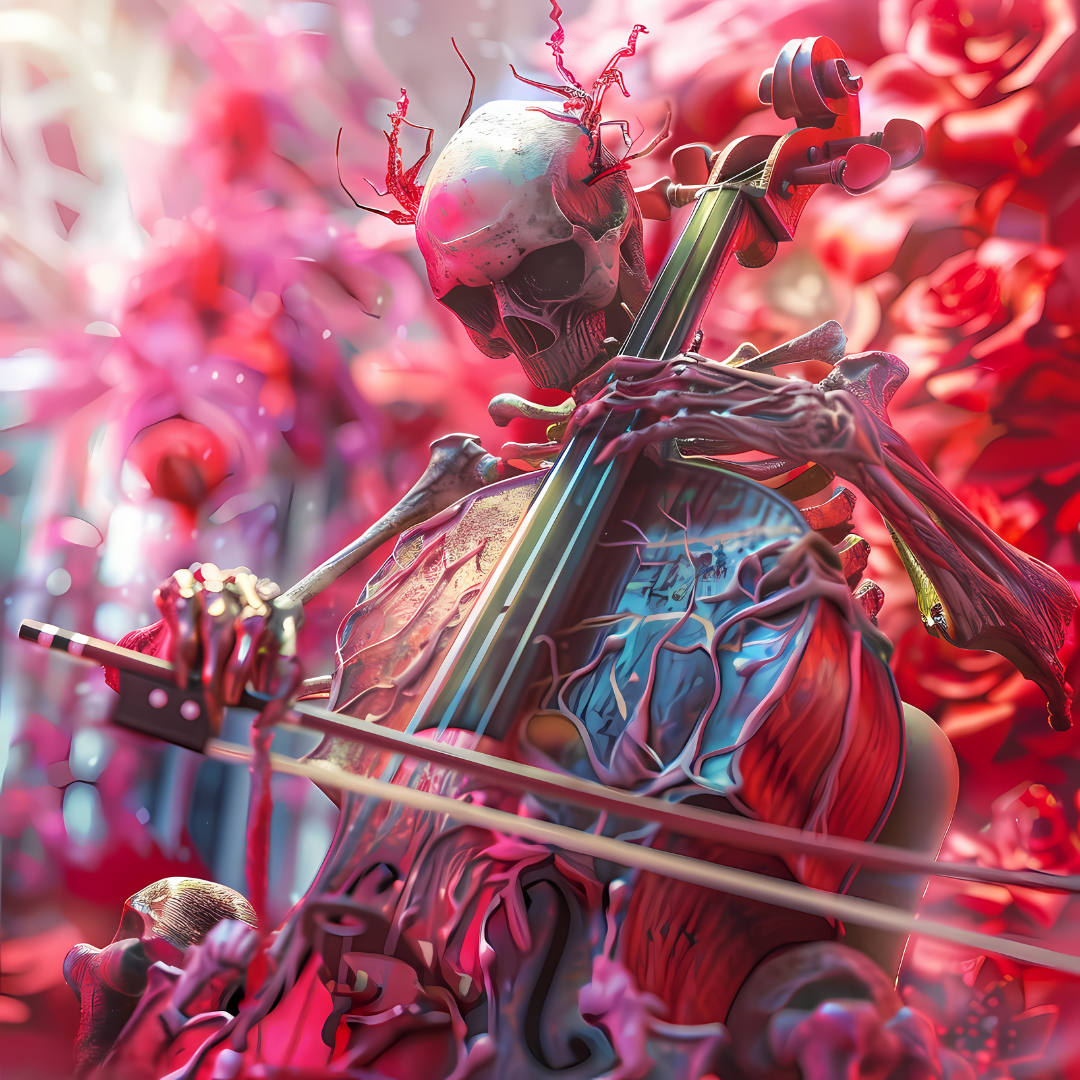
Philosopher and historian Mircea Eliade says that it takes two or three centuries for the memory of an individual to dissolve into archetypes. People can only really hold memories in their heads for the first few generations after someone has died. Eliade says that if you are remembered after two or three centuries, you are remembered as a myth or legend, not as a historical figure. It is as if, as memory decomposes, the details of individuality rot away, and myths and legends are the bones underneath.
As Lord of the Underworld, it is, perhaps, not surprising that Pluto is involved in the process of history decomposing into myth. The Pluto return happens at 248 years, right in the middle of Eliade’s 200-300 year range. This milestone can be seen as a test of an individual’s ability to achieve immortality. If we celebrate your Pluto return, you will likely be remembered for a long time after, but you won’t be remembered as yourself.
In The Myth of the Eternal Return, Eliade says that stories of historical figures evolve to become more and more like existing legends, even merging with older mythological figures. In Claude Lecouteux's, King Solomon the Magus, he talks about the ways that the King Solomon merged with the myths of Alexander the Great over time. Both of them were said to have had adventures that took them into the sky and to the bottom of the sea.
Benjamin Franklin’s legacy only just reached its Pluto return in the 1950s, but we are already beginning to see his story merging with the story of Prometheus. Like the titan who brought civilization to humanity, Franklin is known for a number of practical inventions aimed at improving everyday life. One of these inventions is the Franklin stove, an echo of Prometheus’s gift of fire. Even the story of his decision to fly a kite during a lightning storm has promethean themes. The connection to electricity echoes Mary Shelley’s promethean story Frankenstein, and electricity is commonly associated with the promethean planet Uranus.
Mary Shelley herself is approaching her Pluto return (29° Aquarius), and we are already beginning to see her history dissolving into myth as the myth of her creation emerges into the world as AI.
Is it a good thing to become a myth?
Eliade says that humanity once had a deep awareness of this process of myth-making. In Plato’s day, a person didn’t consider themselves fully real except in the ways that their life participated in myths. People knew that, the more archetypal their life was, the more likely they were to be remembered long enough to become mythological figures.
Becoming a myth is not the same as becoming a hero, however. Mythology is full of victims and villains.
When Marie Antoinette reached her Pluto return, she was at a crossroads. She could have been remembered as the Villain who refused to empathize with starving peasants. (“Let them eat cake.”) Or, she could have been remembered as an early Victim of the Reign of Terror, scapegoated for systemic problems outside her control, problems she tried to understand by developing an interest in agriculture like her contemporary the English “Mad King” George III.
As far as the myth-making process is concerned, it didn’t matter if Marie was remembered as Villain or Victim. Both of these roles are thoroughly established archetypes. All that mattered to Pluto was that the complexity of her individual situation was erased to reveal the archetypal skeleton underneath.
Marie Antoinette could not have said, “Let them eat cake,” and been a Victim at the same time. Myths can be beautiful, but they aren’t complicated. A myth cannot handle a character who is a poor victim and privileged at the same time. It can’t handle the complicated tragedy of someone trying, and failing, to empathize. For whatever reason, the zeitgeist needed Marie Antoinette to participate in the Victim archetype, so the official narrative has settled on the story that she never said, “Let them eat cake.”
In a hundred years, I wouldn’t be surprised to find that Marie Antoinette’s story begins to merge with stories of other queens who lost their heads like Anne Boleyn.
Ultimately, though, whether or not becoming a myth is a good thing depends entirely on your definition of good. Do you want to be remembered at any cost? Are you okay with your legacy being shaped by the needs of people who never knew you, two and a half centuries from now? Would you like to be remembered, even if you aren’t really remembered as yourself?
Related Articles