Rebuilding Mutual Care: Sedna in Gemini
Astronomers call Sedna a minor planet, but she is minor in the way that Pluto is minor. Small but mighty. Atomic. The snowflake that starts the avalanche.
Astrologers say that Pluto is powerful because it moves slowly, taking 248 years to pass through all the signs. But Sedna makes Pluto look like a speed demon. Her orbit is 11,500 years long, 46 times faster than Pluto’s. Sedna started moving into Gemini in 2023. By mid-2026, Sedna was only at 1° Gemini. 1 degree in 3 years. And this when she is approaching the fastest phase of her cycle!
Whenever a planet changes signs, it is always my instinct to reflect on the chapter that is just ending. What did it mean? What did we learn? What changes are we ready for?
But when Sedna changes signs, this reflection is even more important: Epochs shift when Sedna changes signs. Literally.
Looking Back on Sedna’s Last 11,500 Year Cycle
The last time Sedna moved into Gemini 11,500 years ago marked the end of the last Ice Age. The world experienced rapid and extreme global warming. Sea levels rose by 400 feet as intensely cold places like Greenland saw average temperatures spike 10° in less than a decade. Glaciers melted quickly, devastating species that were adapted to the extreme cold of the ice age, ending the story of the megafauna like the mammoth and sabertooth tiger.
Humans didn’t die, we changed. All over the world, humans began to gather in sedentary settlements, leaving the wandering lifestyle of the Paleolithic and initiating the agricultural revolution of the Neolithic Age.
Was this a good thing, in retrospect? It depends on who you ask. The decision to commit to a food source that required our species to become rooted in place paved the way for civilization and the specialization that came along with it. Everyone in hunter gatherer bands who is able to work needs to participate in finding and gathering food. There is no space for people to rely on others to do the work of berry picking and spend their time writing essays about newly discovered dwarf planets.
Western astrology in its current form wouldn’t exist if Mesopotamia and Egypt hadn’t created a civilization that supported astrologer-priests thousands of years ago. As an astrologer, I would like to think going without astrology would be a loss, but the new societies that formed during the Neolithic Age didn’t send us inevitably on the path to Utopia.
In their book, The Dawn of Everything, David Graeber and David Wengrow point out that there are many ways human societies could have developed. We didn’t just put down our hunting gear, crown somebody king, and start plowing the fields. Our species experimented for a long time with arrangements that provided us with more support and more freedom than we have today. Our current model has serious drawbacks. It is harder, for example, to wander off when a leader becomes tyrannical if you’ve become attached to being in a certain place.
We are who we are because of our ancestor’s ability to adapt at the end of the last ice age, but many of the growing pains our species is experiencing around our relationship to power have their origins in decisions that were made 11,500 years ago, the last time Sedna moved into Gemini.
Looking Back on Sedna in Taurus
Sedna entered Taurus in 1965. Taurus is famously (stereotypically) associated with food, and food plays a major role in Senda's story. Her severed fingers are the sea mammals that give life to the Inuit people who venerate her.
Humans care for each other by feeding each other. Since 1965, we have been living in a story that care and feeding have broken down in our society. While Sedna was in Taurus, Robert D. Putnam wrote Bowling Alone, a warning about the decline of civic engagement and growing isolation. We saw the rise of TV dinners and Fast Food Nation. Our media diet changed with the invention of the iPod and smart phone. For the first time, it became possible to move through the world with your own soundtrack, privately piped into your ears. Paper newspapers that were once read aloud to the family became digitized, processed by algorithms, and fed back to individual readers in a form exactly intended to match their taste.
By the time Sedna reached the end of her passage through Taurus, the whole world was in complete isolation due to the COVID-19 pandemic. If we socialized at all, it was through video chat, like aliens messaging each other from tiny escape pods.
By the time Sedna left Taurus, our separation from the age-old communal meal seemed complete: We related each other from the neck up like brains preserved in vats. Even if we wanted to share a meal and connect with each other around a table, there were no longer any bodies left to feed.
The Archetypes of Sedna in Gemini: The Paradox of Isolation and Connection
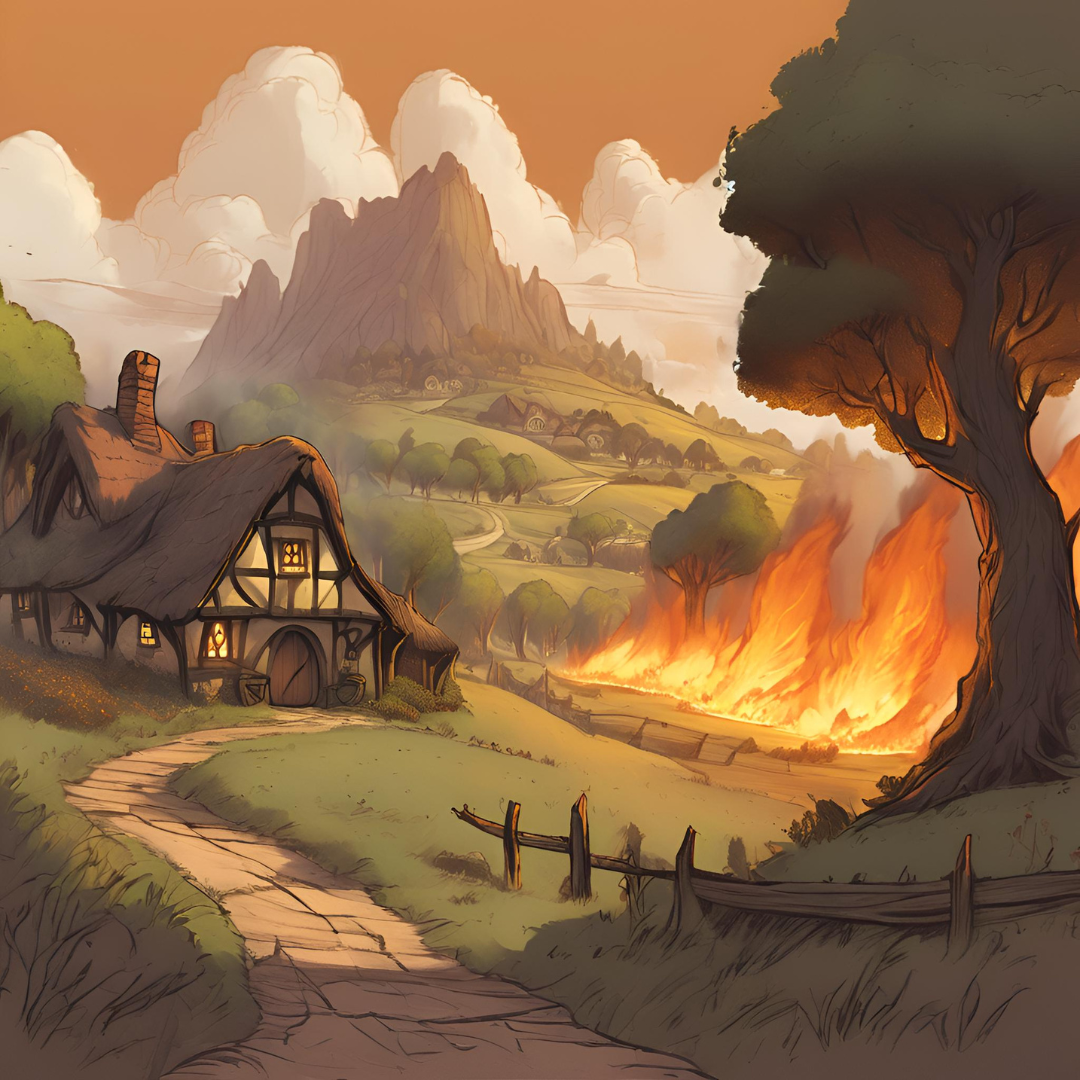
It is difficult not to find parallels between the end of the last Ice Age and our current experience of global climate change. Like their megafauna ancestors, many of the world’s creatures are struggling to survive in environments that are changing faster than their ability to evolve can keep up with, and humans are beginning to realize that we will need to adapt to a world with extreme weather, wildfires, and changing coastlines.
Sedna’s story in Inuit mythology ends with transition. Her father cuts off her fingers and pushes her away from his boat, and she sinks to the bottom of the ocean like whale fall. Her fingers become the sea mammals that traditionally feed the coastal Inuit, and she becomes the ruler of the undersea realm where the dead go for a year to shed their mortal bodies before ascending to a permanent home on the moon.
As Sedna crosses into Gemini, it feels like she has reached the bottom of the sea, isolated and grieving the life she’s been forced to leave behind.
Archetypally, we are sitting in something of a paradox: On the ocean floor, Sedna is as far from human connection as she can possibly be and still be on Earth. And yet, the planet Sedna is approaching the phase of her orbit when she is closest to Earth. The paradox of isolation and closeness is a reflection of the natural tension between the archetypes of Sedna and Gemini. Sedna’s story is about rejection and separation, but Gemini is the place where very different people connect through dialog.
If we really believe the Hermetic Maxim, as above, so below, we need to find a way to reconcile this paradox: isolation and connection are both, somehow, happening at once.
The resolution of this paradox is found in Sedna’s story. When Sedna is most isolated, she experiences the most authentic connection. When she is at the bottom of the ocean, alone and withholding, she is finally met on her own terms. During the years when we hid in our homes from each other--and it feels important to remember that some of us are still hiding--we were closest to Sedna because we were furthest from each other.
The Work of Sedna in Gemini: Building Networks of Care
Something I tell my astrology students over and over again in the Narrative Astrology Lab is that every planetary ingress is a necessary correction. Each sign is a reaction to and correction of the excesses of the previous sign.
When Sedna moves from Taurus and Gemini, she is meant to move from a relationship of sacrifice–literally giving her body to save her father and feed her community– to a relationship of mutual care. She is meant to move from a life defined by her parents’ rejection to receiving gratitude and care from her community, restoring the balance of give and take.
And yet, this change doesn’t just happen. It is a story that someone needs to make true.
Humans have already made this transition once. When our species adopted agriculture, we moved from a lifestyle where everyone in small wandering bands had to focus on gathering food and the sacrifices of animals were central to our ability to survive to a village and city system where we relied on networks of specialists to meet the needs of our communities in sophisticated ways.
As we return to the Gemini phase of Sedna’s cycle, we find ourselves once again needing to build connections of care.
When I talk to people in the caring professions, I hear so many stories of burnout. The burnout of caretakers has been an issue for generations, but since 2020, the stress on caretakers seems to be reaching a breaking point.
Caretaker burnout is rooted in an unspoken belief that caretakers should give and give without receiving in return. We all know “it is more blessed to give than to receive,” so the giving itself is supposed to be a gift. Caretakers are chronically underappreciated and underpaid, yet caretakers are expected to be grateful if they are able to survive while they serve. Instead of a system of mutual aid and interdependence, we have created a system where the people who give the most are appreciated the least… and they are the least equipped to continue to give.
In the story of Sedna, Sedna withdraws her gifts when she feels that she is giving without reciprocity, and we are seeing similar actions from caretakers. Nurses and doctors are going on strike. Spiritual practitioners are withdrawing from leadership positions in their communities and tending to their own healing. Readers and coaches are withdrawing from social media, where they are expected to give and give in exchange for “exposure” (that never seems to come), and focusing on smaller communities where their work is known and appreciated.
The story can end there, with everyone isolated, alone and uncared for, and everyone will lose, but that isn’t the invitation of Sedna’s story.
Sedna is powerful, and she knows it. She uses her power to insist on reciprocity. The Inuit have strict rules around how their food is to be treated. They take only what they need. They treat the sea mammals they eat as humanely as possible, and they recognize Sedna with gratitude as the source of their livelihood.
When the people forget, Sedna doesn’t switch into sacrifice mode. When the people abuse her gift, and Sedna is feeling alone, despairing, self-isolating, and most disconnected from her humanity, she remembers her power. She calls the sea mammals to her, withdrawing her support from an arrangement that has become dysfunctional. In response, a spiritual leader journeys down to the bottom of the ocean to be with her. Like Enki's clay people in “The Descent of Inanna,” the spiritual leader responds with empathy to Sedna's pain, seeing her refusal to give, not as withholding behavior, but as a signal that the relationship has become imbalanced and needs repair.
As Sedna enters Gemini, we are ready to do the work of building networks of mutual care. For every story I hear of caretaker burnout, I hear from another person who feels isolated and alone, restless and wanting to build roots in a real community of people who care for each other.
What are you hungry for? And what would you do if you believed that the people you long for need you just as much?
My research on Sedna continues, and I’ve put together a library where you can book a Sedna reading with me and explore articles, videos, and resources on Sedna.
To learn about my latest research, subscribe to my newsletter and receive my free ebook Listening to Star Song.